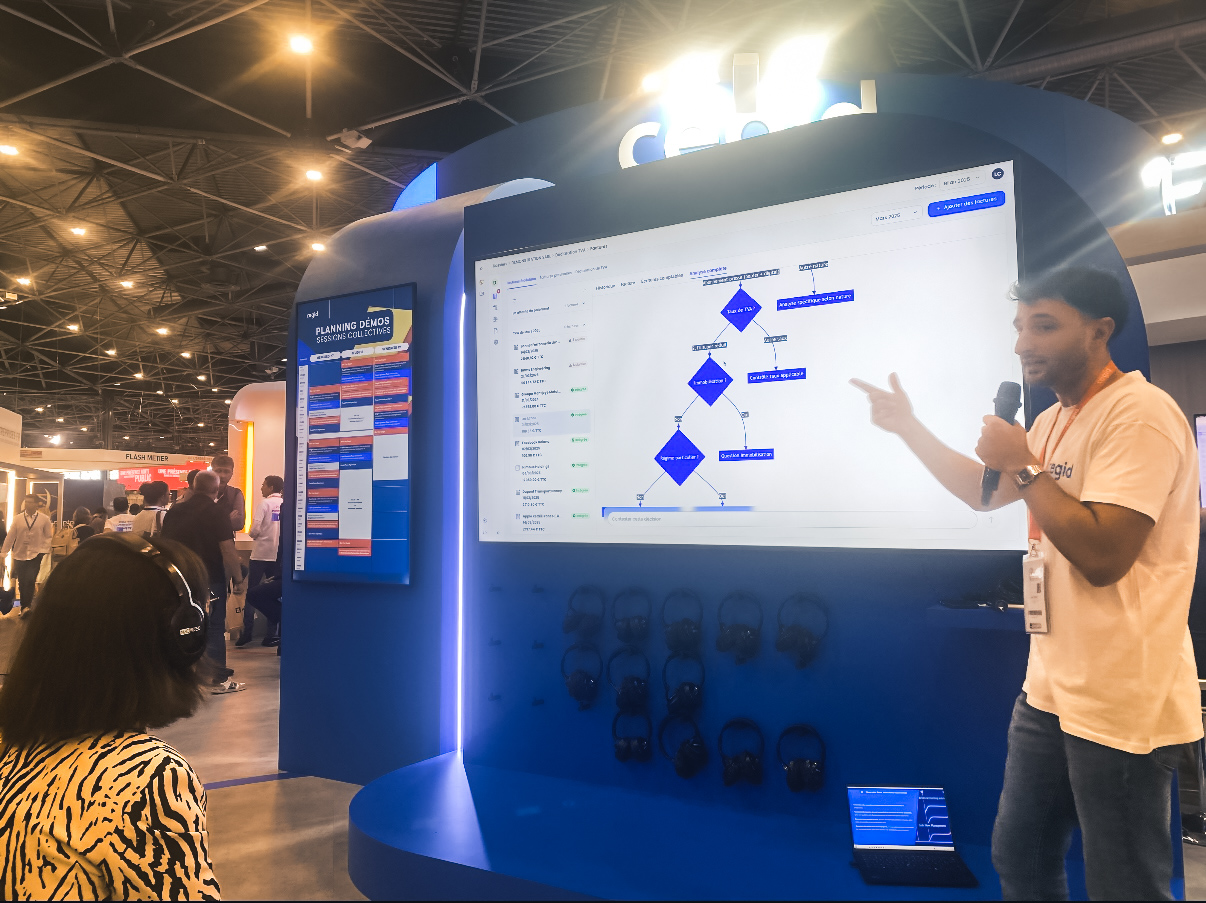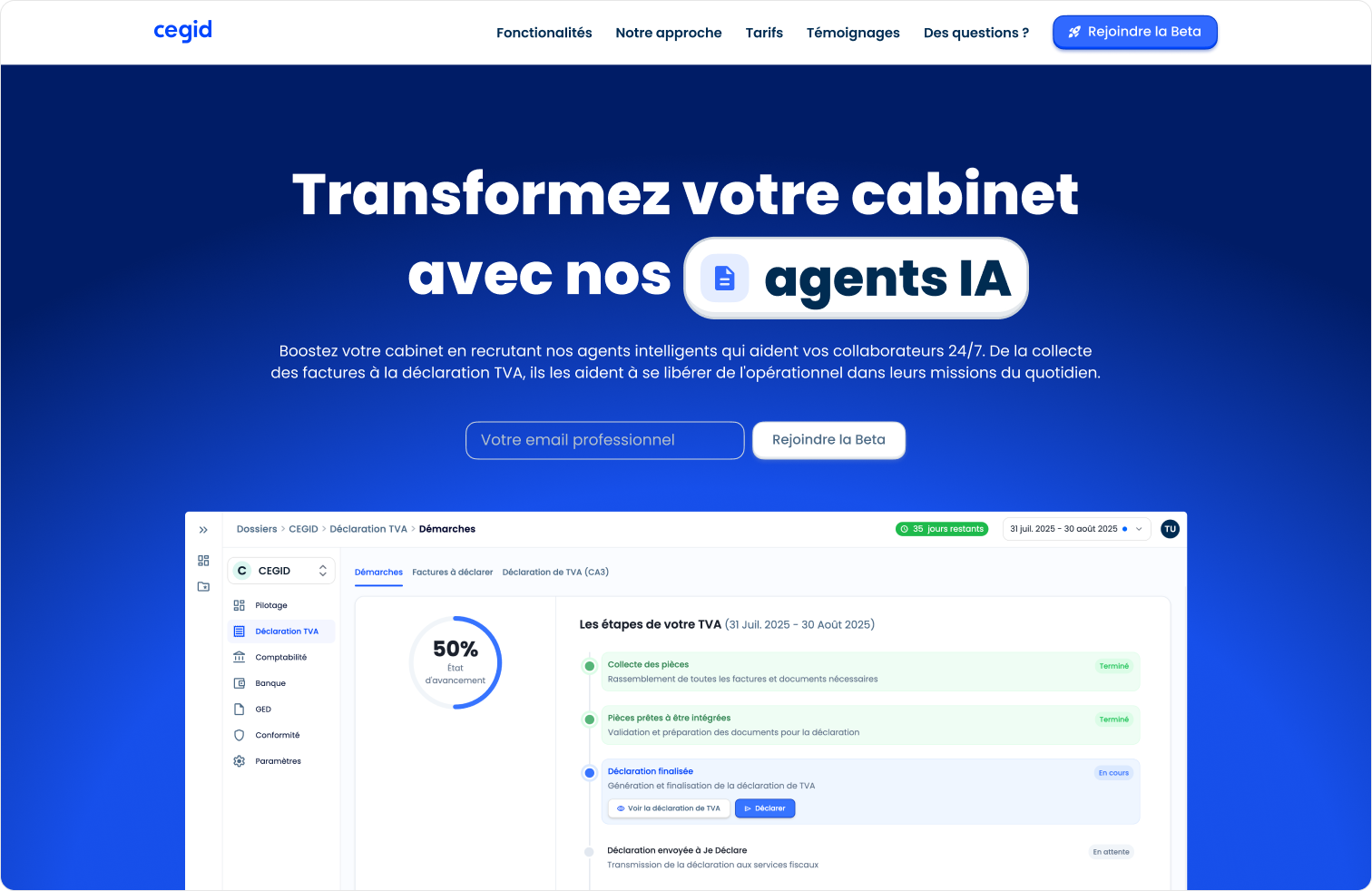
The main challenge was to deliver a product that was not only functional but also approachable for users who were not necessarily tech enthusiasts. I managed the full product workflow using Agentic tools, handling both UI and UX, and participated actively in user research to understand their needs and pain points.
The platform had to educate users step by step, helping them understand the role and potential of AI agents while gradually introducing them to the underlying philosophy. This required designing an interface that was intuitive, easy to understand, and functional, while also exposing the power and efficiency offered by the AI agents.
By integrating UI, UX, and research within a single Agentic ecosystem, I ensured that users could fully grasp and leverage the capabilities of the platform. The result is a high-efficiency accounting tool that reduces manual work, supports learning and adoption, and empowers users to take full advantage of AI-driven automation.
Agentic CPA is an application designed to put agents at the center of accounting workflows. Targeted at accounting professionals, the platform significantly reduces manual work for staff in accounting firms, streamlining processes such as VAT declarations, document analysis, and bank reconciliations. By automating these tasks, the application transforms the way accounting teams operate and drastically reduces the time spent on routine, repetitive tasks.
The project was unique in that it was developed entirely using Agentic tools, with a particular focus on Cursor. All components were created directly within Cursor, which allowed the creation of a fully coded style guide. This approach ensured that the source of truth was the code itself, eliminating friction between design and development. Components designed in Cursor could be directly reused in the production application, enabling faster iteration and higher fidelity between design and implementation.
To maintain quality, I built an agent capable of automatically checking the state of components for compliance and suggesting corrections if needed. This system allowed the team to continuously validate the UI without manual intervention.
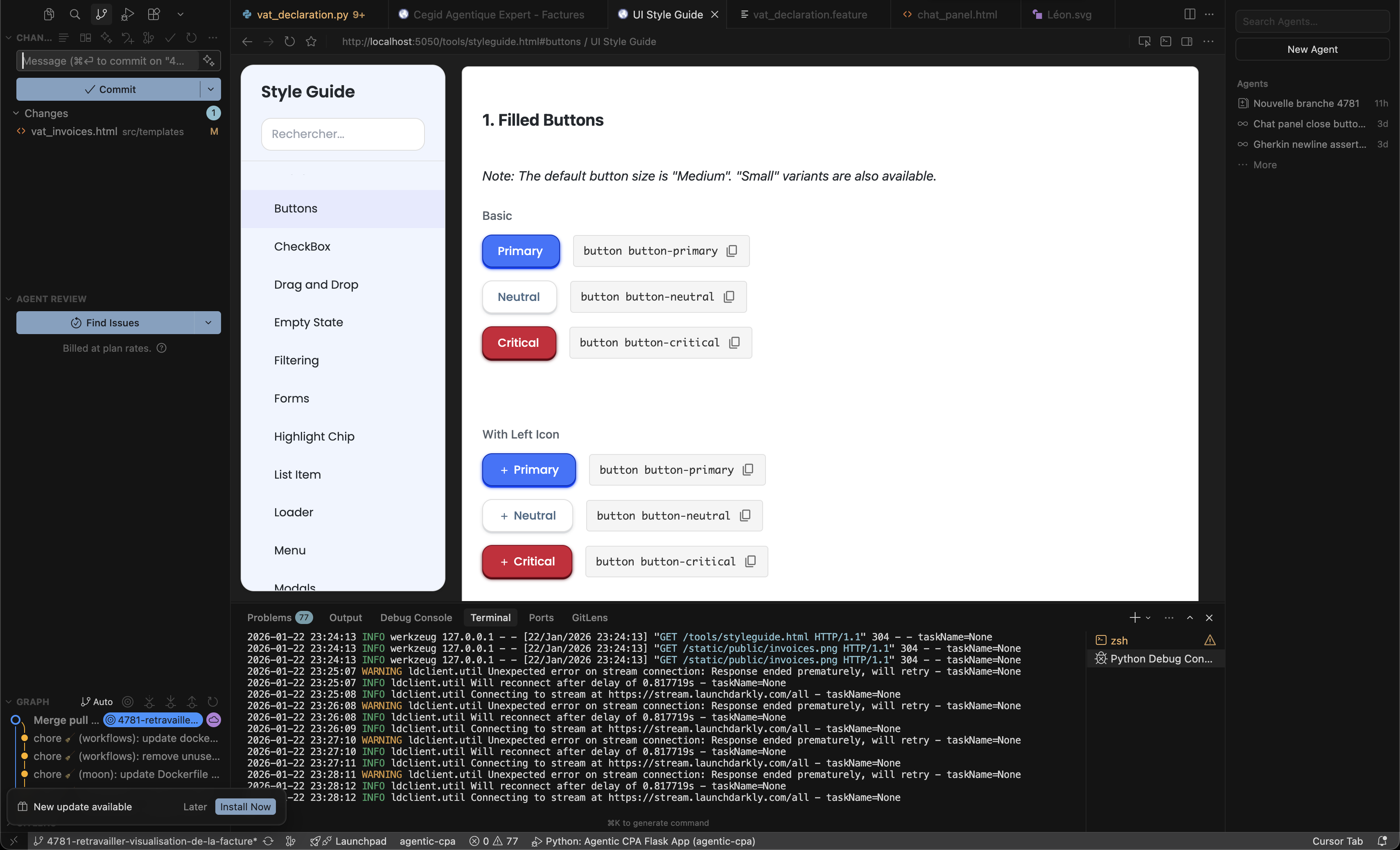
Working in a small, “tiny team” setup, this project allowed us to explore new workflows and test innovative methodologies.
By combining design, development, and automated quality control directly in Cursor, we achieved unprecedented speed in prototyping and implementing features, while ensuring that all components remained consistent and production-ready.